

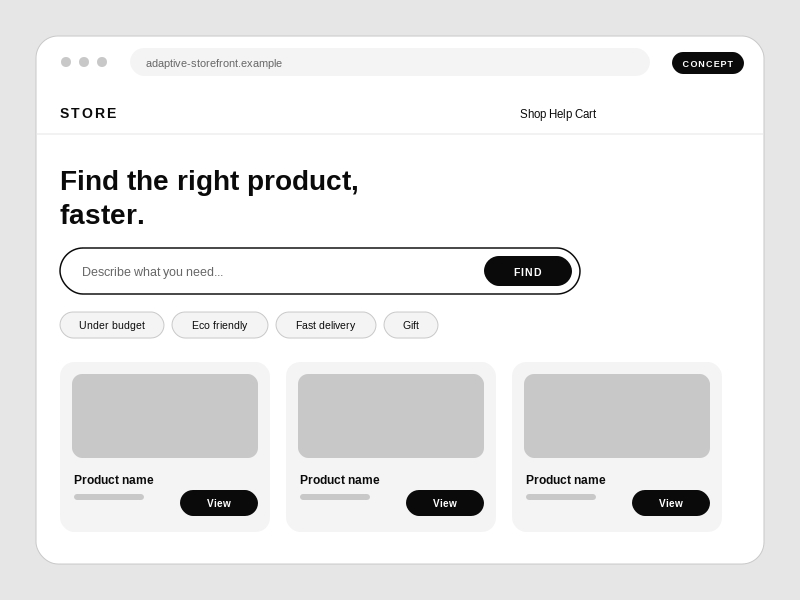
This concept explores how an online store could let shoppers describe what they need in their own words while remaining fast and accessible.
The hypothetical problem
Shoppers do not always know a catalogue's categories. Filters can be confusing, mobile pages can be slow and the search box often fails on natural phrases.
Proposed product experience
- A search box that accepts a sentence rather than a keyword
- Filter chips that reflect what the shopper described
- Fast-loading, accessible product pages
- A layout designed separately for mobile and desktop
Conceptual solution
The storefront would pair a conventional, well-structured catalogue with a product finder that turns a description into filters and suggestions. If the finder is unsure, it would fall back to standard search and categories.
Key features
- Natural-language product finder with standard-search fallback
- Accessible, keyboard-friendly interface
- Lightweight pages and optimised images
- Structured data for search engines
- Responsive layouts
Potential benefits
- Intended to help shoppers reach relevant products in fewer steps
- Intended to keep pages light and accessible
- Hypothesis: clearer search may reduce abandoned visits
These are intended outcomes and hypotheses. They are not verified results.
Technologies
HTML, CSS and JavaScriptProduct data APISearch serviceLanguage-model service for query understanding
Design and engineering approach
- Keep the product and the next action clear on every screen
- Make personalisation optional and understandable
- Build for speed and accessibility from the first layout
Potential applications
- Small online shops
- Product catalogues
- Pre-order and launch pages
Future implementation considerations
- Choose a payment and order-management platform
- Plan product data upkeep
- Review privacy needs for any personalisation
Want something like this?
Tell us about your idea. We will explore what a practical version could look like for your users and your business.